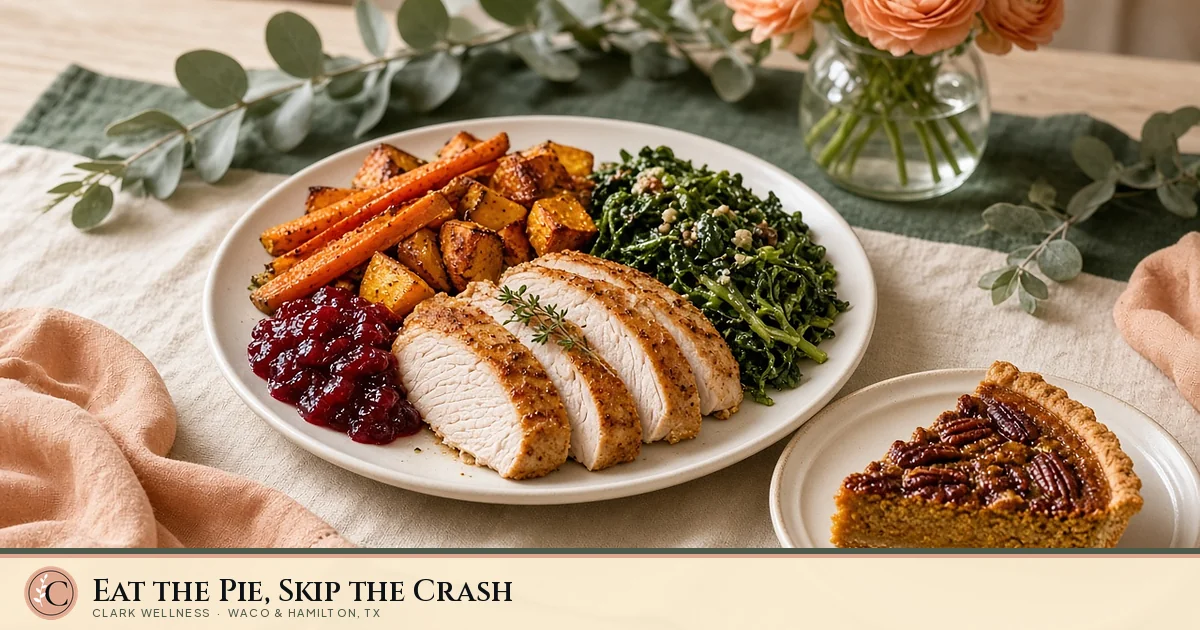
The short answer: You don't have to skip the pie. A protein-and-vegetable start, a plate of dishes you truly love, and a short walk help many people feel steadier after the feast. The famous turkey sleepiness is more likely due to the size of the meal, carb-heavy sides, and alcohol than to tryptophan, and one NIH study found the average holiday weight gain was under a pound.
Key takeaways
- •Turkey's tryptophan isn't the main cause of post-feast drowsiness. Big portions, carbohydrates, alcohol, and digestion effort are more likely.
- •Start with protein and vegetables, then add the favorites you love, so your blood sugar has a steadier landing.
- •Brief light walking breaks lowered post-meal glucose in lab studies.
- •NIH study of 195 adults: about 0.8 lb gained from Thanksgiving to New Year's, on average.
- •Hunger and inactivity, not party count, were tied to holiday weight gain.
Is turkey really why I'm sleepy after Thanksgiving?
Poor turkey. A Mayo Clinic dietitian says it "probably wasn't so much the turkey as it was the quantity of everything you ate," and Cleveland Clinic notes that tryptophan is found in many foods, including milk, eggs, and fish, and that you'd have to eat a lot of them to feel drowsy. The likelier culprits are the whole spread: a large meal, plenty of carbohydrates that can spike and then drop blood sugar, a glass or two of wine, and extra blood flow to your digestive system.
Good news: that's a plate-and-pace pattern, which you can influence.
What's a steadier Thanksgiving plate?
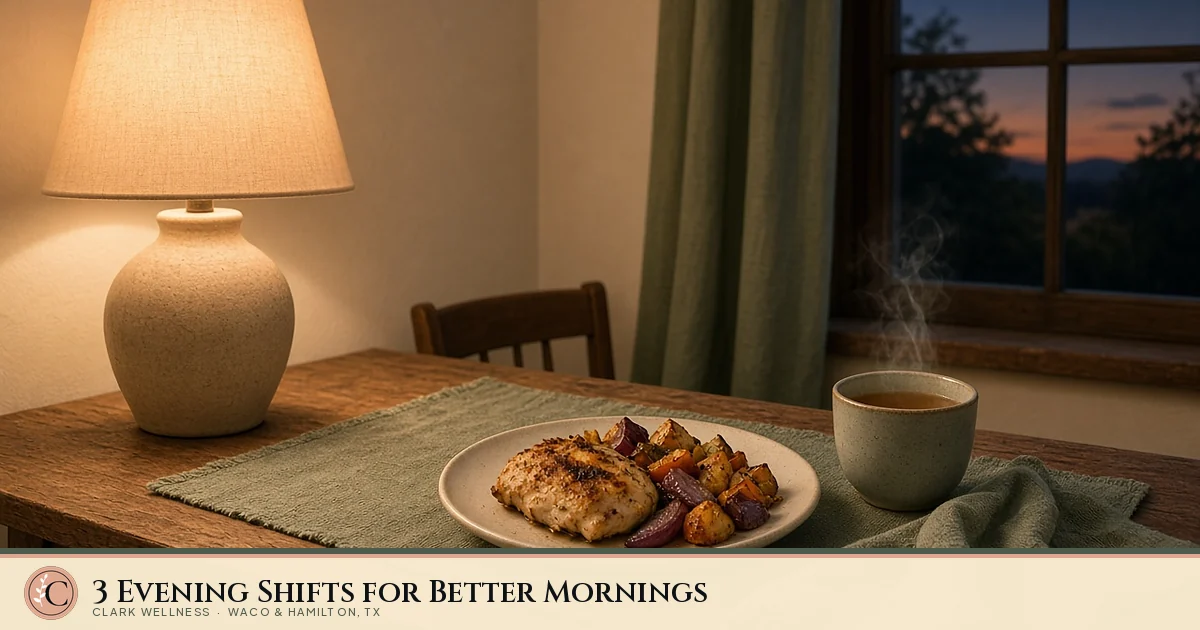
Try this order of operations: put protein and vegetables on your plate first, then add the dishes you've been waiting all year for. Have dessert after a real meal, not instead of one. That fits the 2025–2030 Dietary Guidelines, which emphasize protein and whole foods and encourage limiting added sugars, refined carbohydrates, and alcohol.
Johns Hopkins researchers list skipped meals among the things that can push glucose around, so "saving up" by skipping breakfast may backfire. Your blood sugar likes a little predictability, even on a holiday.
Does a walk after dinner really help?
A little stroll is one of the kindest things you can do for your post-meal glucose. A 2022 meta-analysis found brief, light walking breaks after meals lowered post-meal blood glucose compared with sitting.
If you're in Central Texas, the timing is lucky: Christmas at the Silos at Magnolia starts Nov 27, and Cameron Park Zoo's Wild Lights opens the same day. Lights are a very good reason to stroll.
How much weight do people actually gain over the holidays?
Less than the legend. In a 2000 NIH study of 195 adults, people gained about 0.8 pound on average between Thanksgiving and New Year's, and fewer than 10% gained more than 5 pounds. Participants overestimated their own gain by about 3 pounds.
The honest part of the story: the extra weight wasn't lost over the following months, and people who reported more hunger or less activity gained the most. Hunger and activity, not the number of parties, were the two factors that stood out.
Want a plan that fits your body, not the internet's? Take the free Root Cause quiz (start here) or book a visit.
Quick FAQ
Should I skip meals before Thanksgiving dinner?
It's usually not helpful. Skipped meals can move blood sugar, and arriving very hungry makes a large plate more likely. Eat normally and save room for what you love.
Is turkey actually bad for me?
No. It's a good source of protein. It just isn't the reason you feel sleepy after a huge meal.
Does alcohol change how I feel after dinner?
Often, yes. Alcohol can add to drowsiness and fragment sleep later. The Dietary Guidelines advise limiting alcohol.
Sources
- •Mayo Clinic Minute: Don't blame the turkey for being tired
- •Cleveland Clinic: Why Thanksgiving Dinner Makes You Sleepy
- •NICHD: Holiday Weight Gain Slight, But May Last a Lifetime (NEJM, Yanovski et al., 2000)
- •Sports Medicine 2022 meta-analysis: interrupting sitting with standing and light walking (Buffey et al.)
- •USDA: Dietary Guidelines for Americans 2025-2030 release (Jan 7, 2026)
- •Johns Hopkins Bloomberg School of Public Health: Are Glucose Monitors Useful for People Who Don't Have Diabetes? (Jan 28, 2026)
- •Baylor Waco event listing: Christmas at the Silos, Nov 27-Dec 20, 2026
- •Cameron Park Zoo: Wild Lights 2026 (Nov 27-Dec 30, 6-9 PM, 3 million lights)
Not medical advice. Results vary.
Want to talk this through?
Book a free discovery call with Angelica Clark, PA-C, FMCP-M, or take the free Root Cause quiz to get a clearer picture of what may be driving how you feel.