The short answer: Perimenopause often starts in the late 30s and 40s, and the symptoms are worth addressing early, not putting off until they take over your day. The Menopause Society says this transition usually begins in the mid-40s, can start in the 30s, and lasts about 4 to 8 years. In 2026 the FDA also updated boxed warnings on several menopausal hormone therapy products, which makes a careful, personal conversation with a clinician even more timely.
Key takeaways
- •Perimenopause often begins in the late 30s to mid-40s; The Menopause Society says it usually starts in the mid-40s, can begin in the 30s, and lasts roughly 4 to 8 years.
- •Symptoms such as cycle changes, sleep disruption, mood shifts, and hot flushes are worth addressing early.
- •Perimenopause draws roughly 300,000 U.S. searches a month, more than "menopause" itself, per a third-party analysis of Google data.
- •FDA action: six products on Feb 12, 2026; three estradiol patches on Oct 30, 2026. Risk information remains in other sections of the labels.
- •A single hormone test is rarely a simple yes-or-no, because levels swing during the transition; a broader look still helps.
Why is everyone suddenly talking about perimenopause?
Because a lot of us finally have a word for it, and many women are noticing changes earlier than they expected. The Menopause Society describes perimenopause as usually beginning in the mid-40s, lasting about 4 to 8 years, with symptoms that may start in the 30s. One 2026 analysis of Google data counted about 301,000 monthly U.S. searches for "perimenopause" versus 165,000 for "menopause," and Google Trends interest rose 343% over five years. Another tracker puts the monthly figure at 368,000, so treat the numbers as a direction rather than an exact count.
The questions people ask AI tools sound familiar: "I can't seem to lose weight. Is this menopause?" "Why do I feel so anxious?" "Is there medication?"
What did the FDA actually change?
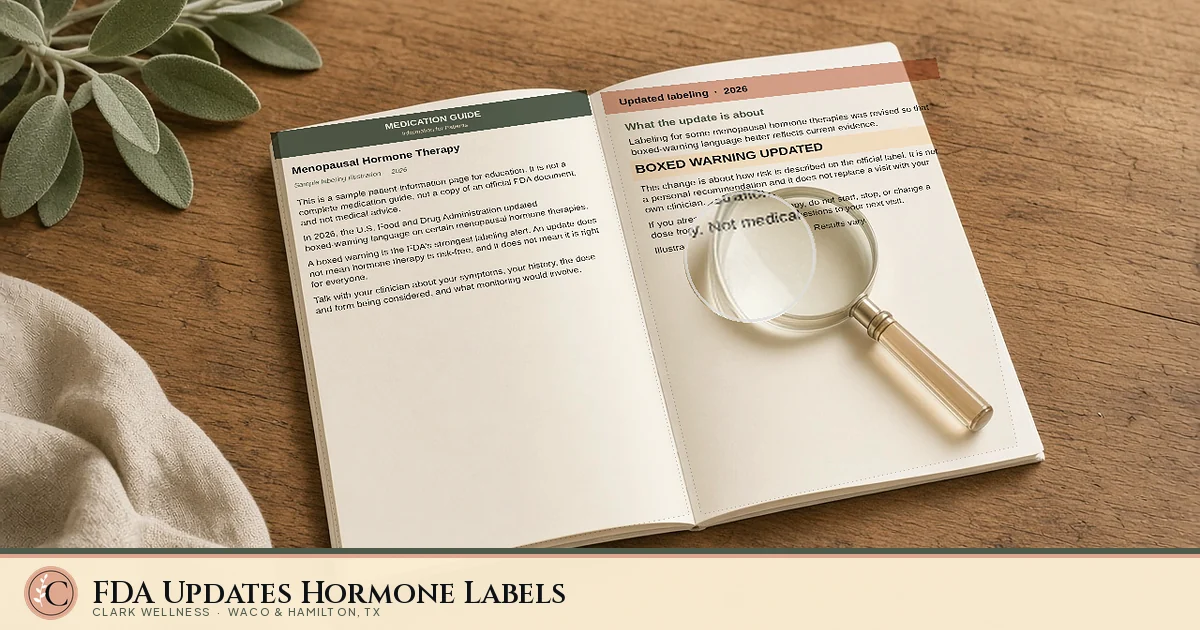
On Feb 12, 2026, the FDA approved label changes for six menopausal hormone therapy products, removing risk statements about cardiovascular disease, breast cancer, and probable dementia from the boxed warning. On Oct 30, 2026, HHS announced the same change for three estradiol transdermal patch products.
Those risks are still described in other parts of the labeling, and the endometrial cancer boxed warning remains on whole-body estrogen-only products, according to the Office on Women's Health.
Does this mean hormone therapy is risk-free now?
No, and the decision is still personal. Risks and benefits depend on age, time since menopause, symptoms, medical history, dose, route, and whether you have a uterus. Some experts have also asked the FDA to share more detail about its evidence review.
You can hold both ideas at once: the old warnings were painted with a very wide brush, and a personal risk conversation still matters.
How do I know if it's perimenopause?
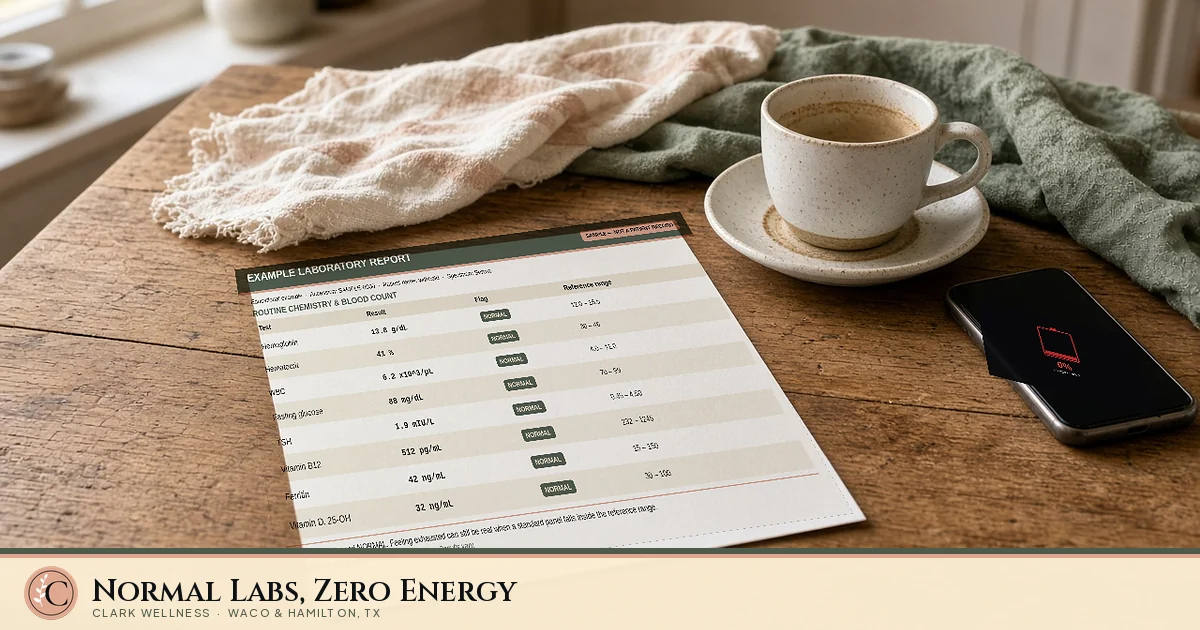
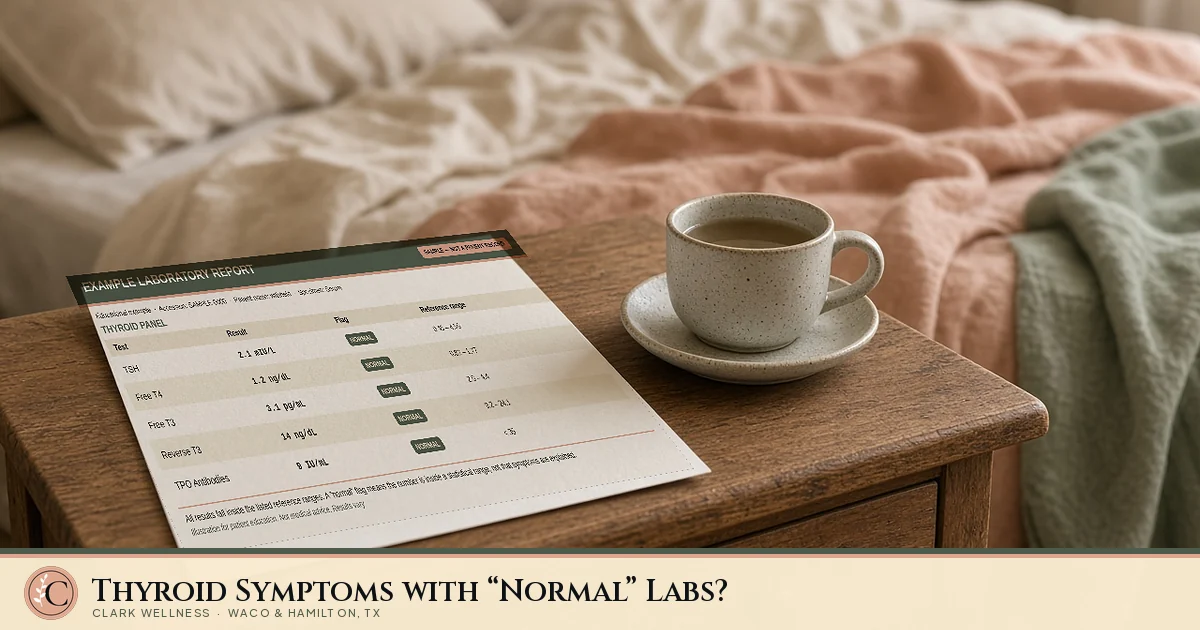
Start with your symptoms and your story, even if you're still in your late 30s or early 40s. Cycle changes, new sleep trouble, mood shifts, hot flushes, and night sweats can show up years before your last period, and they're worth a conversation then, not years later. Hormone levels such as FSH swing during the transition, so a single blood test is rarely a clean yes-or-no. That doesn't mean testing is useless. A broader look can still help rule in or out other contributors, such as thyroid changes, iron status, or blood sugar patterns, and can give you a fuller map.
If symptoms begin earlier than you expected, or they're disrupting your days, talk with a clinician who will take that seriously and look at the whole picture.
Tomorrow night, I'm teaching why labs can look normal when you still feel off, including where hormones, blood sugar, and evening habits fit. The Hormone Hoax is free, live, and 6–7 PM Central on Google Meet. Claim My Free Seat.
Quick FAQ
Is perimenopause the same as menopause?
No. Perimenopause is the transition leading up to menopause, which is defined as 12 months without a period when not using hormonal contraception. Symptoms can begin years earlier, often in the late 30s or 40s.
Did the FDA approve hormone therapy for everyone?
No. The FDA changed boxed-warning language on specific products. It did not say hormone therapy is right or risk-free for every woman.
Should I get a hormone test to confirm perimenopause?
A single FSH or estrogen level is rarely a simple confirmation, because those numbers swing during the transition. Symptoms, your age and cycle pattern, and a broader evaluation (including thyroid and other contributors) usually tell a clearer story than one lab value.
Sources
- •perigirlies: Perimenopause statistics 2026 (Google Keyword Planner and Trends, pulled Aug 24, 2026)
- •RisingTrends: Top 50 Health and Wellness Trends (Nov 2026)
- •SHTI 2025: Mixed-methods evaluation of LLM chatbots for menopause (top patient questions)
- •FDA: Approves Labeling Changes to Menopausal Hormone Therapy Products (Feb 12, 2026)
- •HHS: Major Advances in Menopause Care (Oct 30, 2026)
- •Contemporary OB/GYN: FDA removes boxed warnings from 3 more MHT products
- •Office on Women's Health: Hormone therapy safety
- •NICE QS143: Diagnosing perimenopause and menopause
- •The Menopause Society: Many Women Still Confused About Perimenopause
- •The Menopause Society: International Differences Exist in Knowledge Gaps and Most Common Perimenopause Symptoms
Not medical advice. Results vary.
Want to talk this through?
Book a free discovery call with Angelica Clark, PA-C, FMCP-M, or take the free Root Cause quiz to get a clearer picture of what may be driving how you feel.