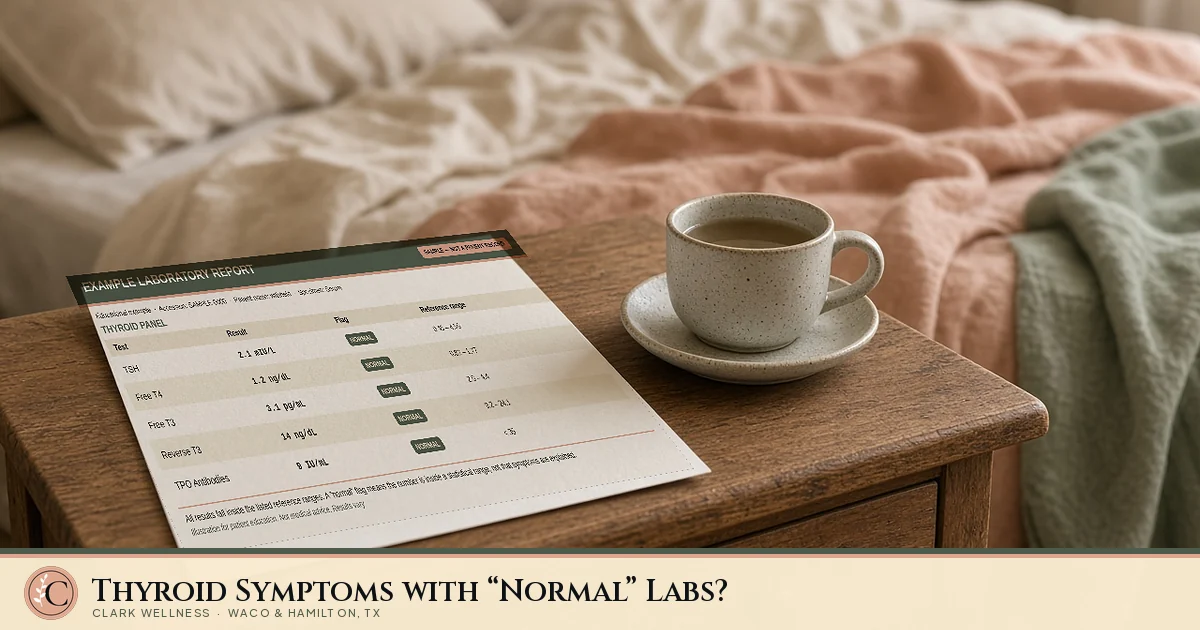
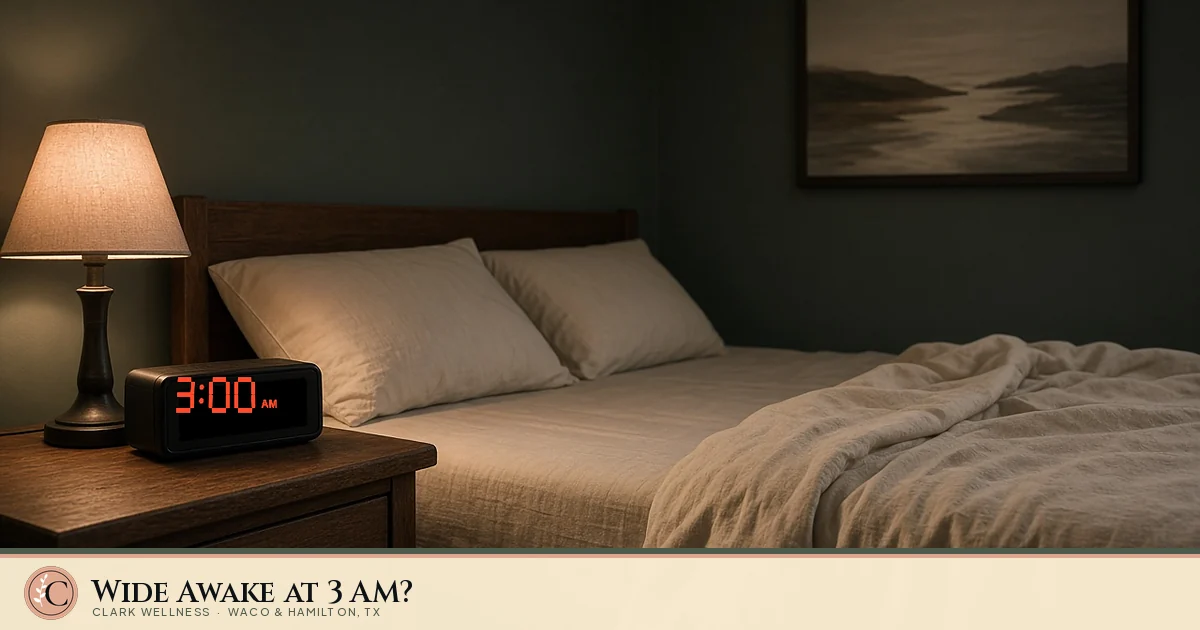
The short answer: Waking around 3 AM is very common. For people who fall asleep around 10 PM, 3 AM tends to land in lighter REM sleep, where a trigger can nudge you awake. Evening blood sugar, late light, a cortisol rhythm that hasn't settled, stress, alcohol, and a full bladder are common ones. If it happens often or leaves you exhausted, it's worth a conversation with a clinician, because sleep apnea and insomnia can sit behind it.
I know sleepless nights in my own body, not just from the exam room. I used to go through stretches when I could not sleep, and I remember how hard it is to lie awake and wonder what's wrong with you. Your symptoms are real. You deserve answers. That is a big part of why I became the practitioner I prayed for.
Key takeaways
- •3 AM often falls in lighter REM sleep, which is easier to interrupt.
- •Cortisol should be lower at night so you can stay asleep; a wired HPA axis, late light, or an evening blood sugar swing can get in the way.
- •Common triggers also include stress, alcohol, napping, pain, and a full bladder.
- •A protein-and-vegetable dinner, a short walk, dimmer light, and a steady wind-down help you stay asleep.
- •Alcohol can help you fall asleep but tends to fragment the rest of the night. Leave 3 hours between the last drink and bed.
- •If you're awake more than 15 to 20 minutes, get up and do something calm, then return to bed.
Why do I wake up at 3 AM?
Nighttime awakenings are common, and a clock that reads 3:07 again isn't a personal attack. According to Cleveland Clinic sleep medicine specialist Nancy Foldvary-Schaefer, DO, for adults who go to bed around 10 PM, 3 AM typically falls in REM sleep, the lightest stage. That makes it easier for something to pull you awake.
Common triggers include evening meals and blood sugar swings, bathroom trips, light, noise, stress, daytime naps, pain, and alcohol. Your body can also get conditioned to wake at a time that once had a reason, such as a crying baby.
Could blood sugar, hormones, or stress be involved?
Yes. In my practice, these are some of the first patterns I look at when someone tells me they keep waking in the night. Stress and anxiety are well-documented triggers for night waking, and they run through your HPA axis, the system that tells your adrenal glands when to release cortisol. Cleveland Clinic explains that most people have lower cortisol in the evening, when it's time to sleep, and peak levels in the morning. If a wired day, late screen light, or an uneven evening meal keeps that rhythm from settling, 3 AM is a vulnerable window.
Perimenopause can also play a role, since hot flushes and night sweats don't check the clock before showing up. Evening meals matter too: after you eat, blood glucose rises, and the spike-then-dip that follows can contribute to feeling off. A dinner built around protein, vegetables, and fiber helps keep that pattern steadier. Pair it with dimmer light and a consistent wind-down.
What helps you sleep through the night?
When I walk through this with patients, we start with the unglamorous basics:
- •Steady the evening plate. Build dinner around protein, vegetables, and fiber, and take a short walk afterward if you can.
- •Go dark. Blackout curtains or a sleep mask help, because light at night tells your brain it might be daytime.
- •Cultivate quiet with earplugs or a white-noise machine.
- •Time the nightcap. Have your last drink at least 3 hours before bed.
- •Skip long naps. If you nap, keep it under 20 minutes.
- •Keep a steady schedule, including weekends.
- •If you wake up, give yourself 15 to 20 minutes. If you're still awake, get up and try something dull, like reading or calm music, and leave your phone alone.
When should I get it checked?
Occasional awakenings are common. Talk with a clinician if they're frequent, long, or paired with daytime sleepiness. Sleep apnea is most common during REM sleep, especially for women, so loud snoring, gasping, morning headaches, or unrefreshing sleep are worth raising. Sleep disorders are generally defined by symptoms lasting at least three months, but you don't need to wait that long to ask for help. If nights like this have been stacking up, I want you to know it's worth asking sooner rather than later.
Want a simple evening plan to try this week? In my free live class, The Hormone Hoax, we cover three evening shifts you can start right away. It's Tuesday, Nov 17, 6–7 PM Central on Google Meet. Claim My Free Seat.
Quick FAQ
Does waking at 3 AM mean my cortisol is high?
A clock reading of 3 AM isn't a diagnosis on its own. Cortisol should normally be lower at night, and a stretched HPA axis, evening blood sugar, late light, and a wired day can all make it harder to stay asleep. Those patterns are worth looking at with a clinician.
Should I stay in bed if I wake up?
Give yourself 15 to 20 minutes to drift off. If you're still awake, get up, do something calm in low light, and go back to bed when you feel sleepy.
How long should I wait before getting help?
Sleep disorders are typically defined by symptoms lasting at least three months, but see someone sooner if you have loud snoring, gasping, or heavy daytime sleepiness.
Sources
- •Cleveland Clinic: Why You Keep Waking Up at 3 a.m.
- •NICE QS143: Diagnosing perimenopause and menopause
- •Johns Hopkins Bloomberg School of Public Health: Are Glucose Monitors Useful for People Who Don't Have Diabetes? (Jan 28, 2026)
- •USDA: Dietary Guidelines for Americans 2025-2030 release (Jan 7, 2026)
- •Sports Medicine 2022 meta-analysis: interrupting sitting with standing and light walking (Buffey et al.)
- •Cleveland Clinic: Cortisol
- •Cleveland Clinic: Hypothalamic-Pituitary-Adrenal (HPA) Axis
Not medical advice. Results vary.
Want to talk this through?
Book a free discovery call with Angelica Clark, PA-C, FMCP-M, or take the free Root Cause quiz to get a clearer picture of what may be driving how you feel.