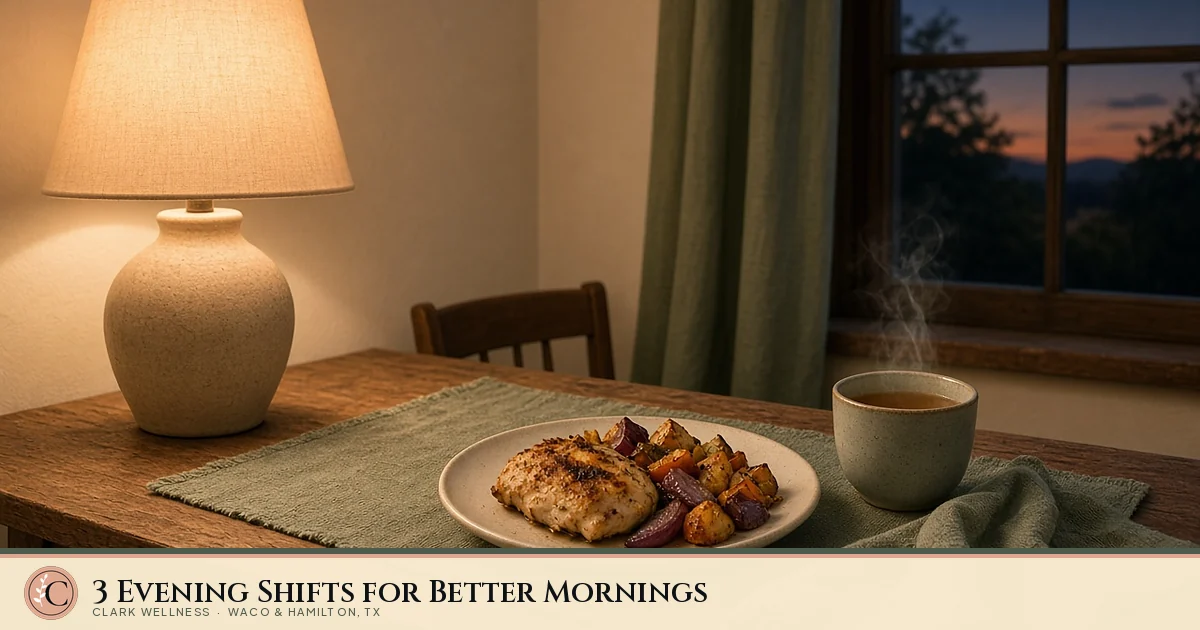
The short answer: Three small evening shifts can make tomorrow feel easier: dim the light, build a steadier evening plate, and repeat a calm wind-down every night. Together they support your blood sugar and your cortisol rhythm, the pattern that should be lower at night so you can sleep. I'm teaching all three tonight at 6 PM Central in my free class on why labs can look normal while you still feel off.
Key takeaways
- •Shift 1, light: bright light at night tells your brain it may be daytime, so dim lights and screens as bedtime nears.
- •Shift 2, evening blood sugar: protein, vegetables, and fiber at dinner, and a short walk afterward.
- •Shift 3, steady wind-down: a consistent bedtime, a last drink at least 3 hours before bed, and a short, repeatable routine.
- •These habits also support your HPA axis, so cortisol can settle at night the way it's meant to.
- •Pick one shift for seven nights and note your energy each morning.
- •Tonight: free live class, 6–7 PM Central, on Google Meet.
Shift 1: How do I use light to sleep better?
Light is a signal. Cleveland Clinic's sleep specialist explains that light at night is absorbed through the eyes, and the brain starts to think it's daytime when it's in a well-lit space, which can make it harder to stay asleep. Her advice is to go as dark as possible with blackout curtains or a sleep mask. That matters for cortisol too: most people have lower cortisol in the evening, when it's time to sleep, and peak levels in the morning.
Tonight, try turning off overhead lights an hour or so before bed, using lamps instead, and keeping your phone out of reach if you wake up.
Shift 2: What should my evening plate look like?
Aim for a plate built on protein, vegetables, and fiber, with fewer refined carbohydrates and added sugars. That lines up with the 2025–2030 Dietary Guidelines, which emphasize protein, whole foods, and limiting highly processed foods and added sugars.
Then, if you can, take a short walk. A 2022 meta-analysis found brief light walking breaks lowered post-meal glucose compared with sitting. A steadier evening curve is one of the simplest ways to support overnight energy and sleep.
Shift 3: What makes a good wind-down?
The one trait is repetition. Sleep specialists recommend going to bed and waking up at the same time each day and adopting a calming routine that primes you for sleep. Other well-supported tweaks: have your last drink at least 3 hours before bed, since alcohol tends to fragment sleep, and if you nap, keep it to 20 minutes or less.
A wind-down can be as plain as stretching, a warm shower, and a boring book. Dull is the goal, and it's one of the kindest things you can do for a busy HPA axis.
How do I try these without overhauling my life?
Pick one. Run it for seven nights. Each morning, rate your energy from 1 to 10 in a notes app. At the end of the week, you'll have your own data, which is worth more than any internet trend. If sleep stays rough, you wake up gasping, or you feel exhausted despite your best efforts, bring your notes to a clinician.
What's happening in tonight's class?
The Hormone Hoax: Why Your Labs Look Normal but You Still Feel Off is a free, live class on Google Meet, 6–7 PM Central. The link goes only to registered attendees, so register first. We'll talk about why normal labs and a not-normal day can coexist, how blood sugar and evening habits fit in, and the three shifts above.
There's still time to join us. Claim My Free Seat.
Quick FAQ
Is the class really free?
Yes. It's free and live on Google Meet.
How do I get the link?
Register on the class page. The Meet link goes only to registered attendees.
Is this medical advice?
No. The class and this post are educational. Talk with your own clinician about your personal health.
Sources
- •Cleveland Clinic: Why You Keep Waking Up at 3 a.m.
- •USDA: Dietary Guidelines for Americans 2025-2030 release (Jan 7, 2026)
- •Sports Medicine 2022 meta-analysis: interrupting sitting with standing and light walking (Buffey et al.)
- •Cleveland Clinic: Cortisol
- •Cleveland Clinic: Hypothalamic-Pituitary-Adrenal (HPA) Axis
Not medical advice. Results vary.
Want to talk this through?
Book a free discovery call with Angelica Clark, PA-C, FMCP-M, or take the free Root Cause quiz to get a clearer picture of what may be driving how you feel.